
Hidden Treasures: The Intriguing World of Mycology
Hidden Treasures: The Intriguing World of Mycology
Written by Yang Lim
“Mycologists aren’t sure how many species of fungi there are, estimating diversity somewhere between 2 and 1 million. Only 150,000 species are formally described; Most people can maybe name a handful. How many do you know?”
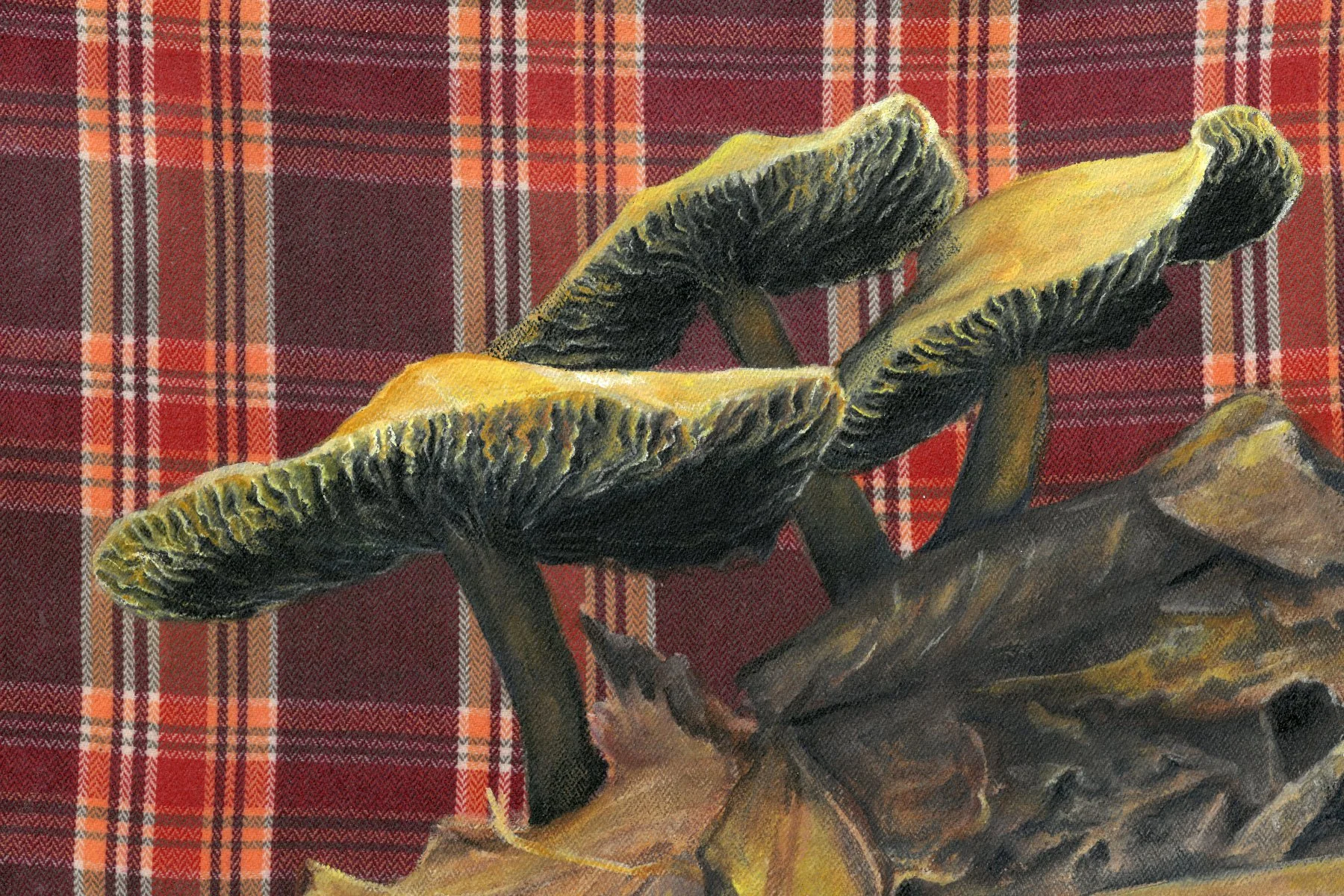
Such is one of the captions in Kirra Kent’s Fungus on Flannel series that captures the wonders of mycology for a general audience. Going beyond the mushrooms that people may be familiar with seeing in the supermarket, the series features a variety of unusual-looking species set against the backdrop of colourful flannel patterns, each of which are accompanied by a short blurb. These include details about which species are endangered, the conditions that cause them to be endangered, how fungi are intelligent life, the different ways in which fungi live and function, and going on to enhance people’s knowledge about the fungi’s practical uses for human society and the important roles that they can play within the natural environment.
The word “fungi” may harbour some negative health connotations for people, especially if they do not know that mushrooms are a type of fungi. By highlighting the diversity of these underrepresented species, Kent’s artworks express the unique individuality of these mushrooms through their vivid appearance, colourful textures, and inherent beauty. Using reclaimed textiles as the canvas for creating these paintings, Kent provides an interesting contrast between human-made materials and natural entities that highlights the resilience and liveliness of the latter—in spite of human encroachment on nature, these mycological species continue to survive. People will gain an appreciation for the variety of existing natural life and the implied threats to global biodiversity.
Kent’s aesthetic choices further enhance these works’ visual impact and thematic concerns. The usage of flannel is a conscious choice born out of the fabric collection inherited from Kent’s grandmother, aligning with a desire to reduce one’s consumption and impact on the environment by recycling and reusing materials. Alongside this, Kent wants to celebrate the role of certain mushroom species in helping to decomposing waste, such as in the work Cellulose, but at the same time draw attention to human society’s outsized and debilitating impact on the environment. The colour choices in these paintings also contribute to their influence. One of the mushrooms in this series is the wrinkled peach (Rhotodotus), which the accompanying blurb describes as a rare and endangered fungus that is associated with hardwoods in Europe and North America. The orangey-brown colour of these mushrooms contrasts strikingly with the purple flannel background on which Kent has painted it; this accentuates the mushroom’s colour and makes the work more eye-catching for viewers.
Kent’s artist statement affirms that the representation of these species serves as an allegory for the underrepresented perspectives of neurodivergent individuals. Indeed, these works offer alternative perspectives on the natural environment by highlighting the existence and beauty of less well-known organisms that have not typically been popular subjects for artistic representation. They uncover the fascinating and intriguing world of mycology through readily accessible representations that will not only spur people’s interest and curiosity but also generate a desire to learn more about fungi—an underappreciated and often misunderstood part of the natural world.