Here I Am by Paddy Lamb
SITE #2:
Art Gallery of Alberta
2 Sir Winston Churchill Sq NW, Edmonton
GALLERY HOURS
Monday: Closed
Tuesday: Closed
Wednesday: 11am - 5pm
Thursday: 11am - 7pm
Friday: 11am - 5pm
Saturday: 11am - 5pm
Sunday: 11am - 5pm
Paddy Lamb
Here I Am
Here I Am presents the work of 14 artists who have recently relocated to Canada, specifically Alberta, bringing with them a rich and compelling range of cultural backgrounds and experiences. All participating artists are part of the ICAI NAPP program, which supports newcomer artists through mentorship within the arts communities of Edmonton and Calgary. This exhibition explores how these artists are influenced by both their past and present physical and social environments, emphasizing not only the artworks themselves but also the deeply human experiences that inform them.
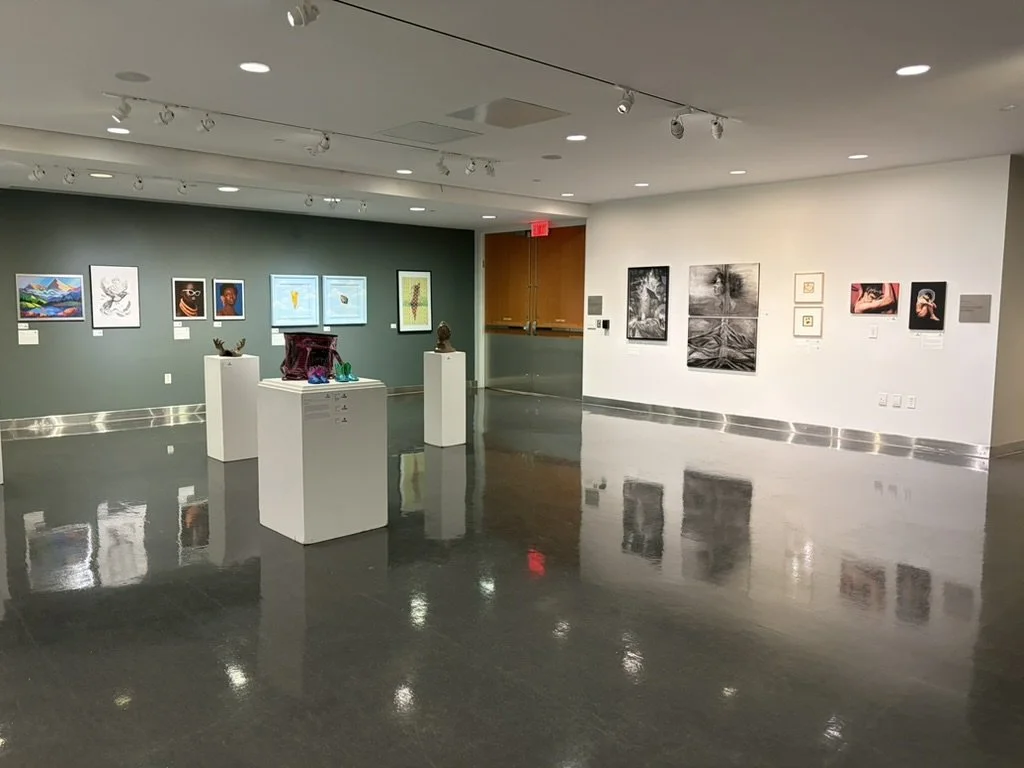
Relocating to a new country involves a complex set of challenges that include navigating unfamiliar customs, languages, and environments. Each artist approaches this journey through a unique lens. How do their cultural traditions persist or evolve at a distance from their former homes? In what ways do memory, identity, and displacement shape their creative expression? This exhibition offers insight into how these artists are influenced by both their past and present physical and social environments. It explores how these influences are reflected in their work as they begin to establish themselves within a new cultural landscape. In doing so, the exhibition emphasizes not only the artworks themselves but the also deeply human experiences that inform them.
All participating artists are part of the ICAI NAPP program, which supports newcomer artists through mentorship within the arts communities of Edmonton and Calgary. The exhibition also underscores the vital role of mentorship and community in fostering artistic growth and integration.
Accompanying each artwork is a short statement from the artist, reflecting on their personal and creative development. These statements offer further perspective on how mentorship and engagement with a new artistic community have shaped their evolving world.
OPENING RECEPTION
June 27, 1pm - 4pm
The first painting is called Artist’s Breakfast. It reflects a period of my life when I was living in a shared room at a charity organization helping people displaced by war. One small table functioned at the same time as a kitchen table and an art studio, and it genuinely became possible to accidentally grab a tube of red acrylic paint instead of ketchup.
The second work, With the Crows, reflects an internal search for home within the emptiness of endless space. It speaks about the feeling of having the whole world open in front of you while having no clear direction for where to go.
In my practice, I use photography and collage to explore portraiture as a space where identity is continuously constructed and reassembled, rather than fixed. In these works I explore how experiences and images recur in altered forms, shaped by shifting environments. In this cycle of repetition and transformation, visibility, distance, and belonging are never resolved, but constantly re-negotiated through the act of making.
Through my participation in the NAPP program at ICAI, I have been able to develop my practice within the Canadian context and become more fully prepared for engaging with a new artistic environment. The mentorship and introduction to a new creative community has strengthened my confidence in positioning my work and navigating this evolving landscape.
After moving to Canada, I went through a period of distance from my art while adapting to a new environment. I found myself searching for familiar elements within this new landscape, and the blooming lilacs became an immediate point of recognition—something shared between here and my home, carrying both presence and memory at once. By joining the creative ICAI art community and with support from my mentor, I was encouraged to return to drawing and to reconnect with my practice. These works mark the beginning of this return.
Shield of Tears began as a poem I wrote in 2023 after seeing news of the destruction in Ukraine and feeling the need to protect my loved ones. I had a vision of a painting to accompany it for several years, and it came to life when a close friend living in Kyiv gave birth to a child, giving the woman I envisioned a real-life connection.
My other painting, Growing my roots, glowing with hope, is a visual metaphor for the immigration process: initial uprooting followed by adaptation to a new environment and community. It was created in response to a poem by Allissa Blondin as part of the Voice & Vision collaboration between artists and writers in Airdrie.
Like many other Ukrainians, I moved to Canada due to the Russian invasion of Ukraine, and my immigration journey has been deeply influenced by the ongoing war. It split my heart in two, witnessing the beauty of community and nature in Canada while being overwhelmed with empathy and sorrow for friends and family back home.
Belonging to an arts community helps me process these feelings and transform them into art. Having a mentor to share hopes and doubts with has given me the strength to continue on this journey and to remember how much kindness still exists in the world.
My practice, centered around my project BARI, is a journey of self-discovery, transformation, and spiritual exploration. I work in digital abstract expressionism that blend traditional and digital techniques.
I start with a scribble. No set idea, just a thought, a feeling, or a memory that I want to find out about. The piece tells me what it is once I'm halfway through it. I trust my hand and my mind. The work is digital, but the part that matters is older than any tool I'm using. Architecture taught me structure and a Sufi upbringing taught me how to listen, both of which show up in my lines, even when I’m not thinking about them.
I'm not giving you information but sharing something I felt that I want you to see from a different perspective. If a piece reminds you of a memory then that's the work doing its job. I aim to inspire others to embrace their own creative journeys and to explore what sits at the intersection of art and technology, trusting the process.
Before NAPP I was working alone and my studio was the screen. The people I made the work for were spread out across countries I couldn't easily get to, and Sudan was somewhere I could only reach by memory. Edmonton was still becoming home.
I applied for the program because my mentor Saskia had told me about it. Without her recommending that I apply, I wouldn't have known it existed. This cohort became the first creative community I had since I left home. My NAPP mentor, Bushra Yousaf, asked me harder questions about my own work than I had been asking myself. Toyin, the CEO and founder of ICAI, built the room and the team at the Immigrant Council for Arts Innovation kept the doors open.
I've learned that space becomes a place when someone else recognizes what you’re trying to make. Distance doesn't pull the work farther away from the people it's meant to speak to but is what the work is made out of. The screen holds Sudan close while I build a life here.
My journey as an artist has been one of continuous learning, self-reflection, and refinement of both my technical skills and creative voice. Through the mentorship experience, I’ve gained clarity in my artistic direction and developed a deeper sense of purpose in my work. Being introduced to a new creative community has expanded my perspective, challenged me to grow, and reminded me of the value of collaboration and shared vision. This experience has not only strengthened my confidence as an artist but has also shaped how I approach storytelling and connection through my craft.
As a visual artist working primarily in drawing, my practice explores themes of migration, identity, and resilience shaped by my experience of displacement and rebuilding a life in Edmonton. My work gives form to emotional states that are often silenced, using repetition, layering, and abstraction to express both vulnerability and strength.
Participating in the NAPP program has been an important part of my artistic growth. Through mentorship and dialogue, I have gained clarity in my visual language and greater confidence in the direction of my work. Being introduced to a supportive creative community has shifted my outlook from working in isolation to engaging in shared exchange, where feedback and connection have become essential to my development as an artist.
Canola Glow captures the radiant beauty of a canola field after the rain, illuminated by a vibrant rainbow stretching across the sky. The painting reflects a fleeting yet profound moment when the rain-soaked landscape shimmers with life, and I feel completely immersed in its magic. Through this artwork, I wanted to preserve the essence of that breathtaking scene forever, a harmonious blend of nature's resilience and brilliance.
Crimson Symphony depicts a scene from Prince's Island Park, where the enchanting beauty of the crimson blooms captivated me. The richness of the red hues, in contrast with the soft and blurred background, created a delightful harmony. The sunlight gently illuminated the petals, making their vibrant colors shine even brighter, as if nature itself had painted them with light. It was impossible to resist the elegance of this scene. The interplay of color, light, and life, truly touched my heart. This moment inspired me to preserve its beauty on canvas, hoping to share the emotion and wonder of that day with others.
Moving to Canada has deeply influenced both my life and my artistic practice. As a realist painter, I have always focused on careful observation, but discovering Calgary’s landscapes and changing seasons has opened a new direction in my work. Through the ICAI NAPP program, mentorship and connection with a new artistic community have helped me gain confidence, expand my perspective, and share my voice more openly. My work now reflects a dialogue between my past experiences and my new environment, shaping both my growth as an artist and my sense of belonging.
Canada was never a country I imagined myself living in, life circumstances and family brought me here. Arriving here has made me reflect on what a place really is. I realized it is like any other country, full of both good and difficult realities. It has a strong global image but also faces challenges I never expected to see in what is considered a “first world” country. I arrived with a suitcase full of hope but as time passed, I felt lost. A different culture, a new language, and a system that operates with its own codes and indirect ways of communicating made it difficult for me to find my place. I felt disconnected for a long time, questioning how distance changes what feels relevant, and what it really means to belong or to share an experience in a new environment.
Completing the NAPP program became a turning point, a bridge between my design practice in Chile and my life here in Canada. Through the ICAI, I connected with artists from many parts of the world, included my mentor, Nifemi Adeleye. These exchanges led me to reflect on my identity as a designer today: what inspires me, what keeps me grounded, and the direction I want to move in. As a designer and fashion artist, I represent my journey through a pair of baby cowboy boots and a tote bag. The boots speak about walking, moving through territories that are often unfamiliar and challenging. A shoe is not only protection; it is identity, presence, and a way of giving meaning to how you move through the world. The cowboy boots are my way of embracing the space I now inhabit in Alberta.
The tote bag reflects an adult perspective: it carries layers of words, colours, histories, materials, and fragments of experience that become stories over time. It holds everything you need, and more, not only physically, but within you: in your memory, your body, your history. It reminds me that even in a new place, I am not starting from zero. I carry my past with me, and it continues to shape how I move forward.
My artistic journey has been shaped by personal transitions, as well as a continuous exploration of emotional expression through color and light. Moving from Ukraine to Canada deepened my connection to themes of change, identity, and in-between states, which remain central to my work. Through mentorship and becoming part of a new creative community, I have gained greater clarity in my voice and confidence in my process. Engaging with other artists has expanded my perspective and encouraged me to take creative risks while staying grounded in intuition. This experience has strengthened not only my artistic direction but also my sense of belonging within a shared creative space.
My work grows from movement—between countries, disciplines, and states of being—and from the need to turn unfamiliar spaces into something personal. Having moved to Calgary, I’ve come to understand that a space becomes a place through layers of presence: memory, interaction, and the marks we leave behind. This mentorship experience, and the introduction to a new creative community, has expanded that idea for me. It showed me how connection can form even without shared history, and how distance doesn’t diminish relevance, but rather reshapes it.
In my practice, I often explore fluid forms, emotional states, and transitions—creating worlds that feel both intimate and open-ended. Whether through murals or smaller works, I’m interested in how people encounter and inhabit these spaces, and how shared experiences can exist without being identical. Being part of this community has deepened my understanding of art not just as a personal expression, but as a way of building quiet connections between people, places, and inner landscapes.
Being introduced to a creative community allowed me to move from working in isolation toward dialogue, exchange, and belonging. This experience has expanded how I understand my role as an artist—less as an individual working alone, and more as part of a living and responsive artistic ecosystem.
Being introduced to a creative community allowed me to move from working in isolation toward dialogue, exchange, and belonging. This experience has expanded how I understand my role as an artist—less as an individual working alone, and more as part of a living, responsive artistic ecosystem.
The NAPP mentorship has allowed me to challenge my inhibitions and take up space. Time and again, I have received the support and grace to spread my wings without fear. Being part of the creative community has offered me hopeful clarity through the dual lens of self-awareness and self-regard.
Alira’s artistic practice is rooted and informed by Asian roots and upbringing, and the memories of a life left behind that is still visceral in memory and meaning. Over time, Alira has developed a strong interest in the intersection of art and mental health, viewing creative expression as a tool for healing trauma, regulating emotions, and fostering connection. Blending Eastern and Western influences, their hybrid style bridges traditions, cultures, and inner and outer worlds.
Through the ICAI NAPP mentorship program Alira has grown to see artworks not just as a personal therapeutic outlet, but as a vital channel for healing, dialogue, and social transformation that connects our shared human experiences. Alira’s paintings remain rooted in memories of childhood—those first moments of realizing that a single color or line can express what words cannot.
My artistic practice is deeply rooted in observing nature—its flora and fauna, the delicate rhythms of the seasons, and the poetic interplay between growth and decay. Through my work, I explore the fragile harmony between humans and the natural world. I work primarily with oil, acrylic, watercolor, and ink, often combining traditional techniques with a modern illustrative sensibility. My recent works focus on the themes of transformation, environmental awareness, and the coexistence of life and decay. The rhythmic lines and layered textures in my work reflect the beauty and vulnerability of nature. Since moving to Canada, I have continued to expand my artistic language, drawing inspiration from Alberta’s diverse landscapes and ecosystems. I believe art is a universal language that connects people across cultures and reminds us of our shared responsibility for the living world.
Through the NAPP mentorship program, I have experienced important personal and artistic growth. Moving to a new country brought many changes, and being part of this program helped me feel supported and less isolated. It gave me the opportunity to connect with other artists, share experiences, and feel part of a creative community. As an artist, this experience helped me better understand my own voice and the themes that are central to my work. Exploring memory, identity, and the connection between inner and outer worlds, my practice reflects both the past I carry with me and the new environment I am learning to live in. In this way, my work exists between two spaces—the one I come from and the one I am building now.
For me, a space becomes a place through memory, emotion, and shared experience. Distance does not make the past less important; instead, it changes how we see and understand it. Through my art, I create a connection between these different layers of experience and invite others to reflect on their own sense of belonging.
The NAPP program has helped me see my work not only as personal expression, but also as part of a larger conversation about migration, adaptation, and identity. It has encouraged me to grow with more confidence and to see my practice as something that can connect people across different backgrounds and experiences.